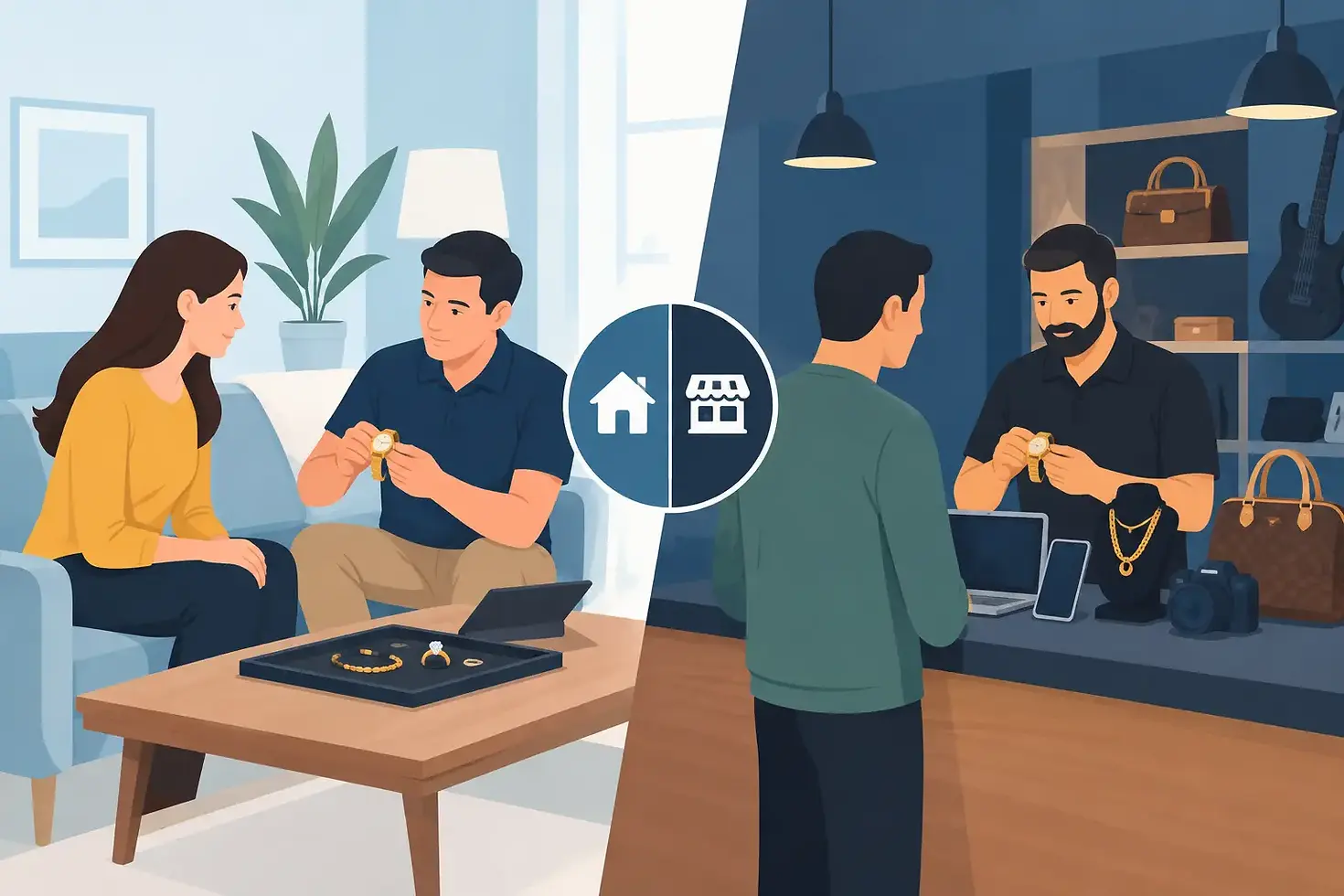
In-Home Valuation Versus Pawnbroker: Which Suits?

A drawer of unworn gold, a watch inherited from a relative, or a box found while clearing a family home can raise a practical question quickly: where should you sell it? When considering an in-home valuation versus pawnbroker visit, the right answer depends on whether you want a loan or a sale, how much privacy matters to you, and how confident you feel carrying valuable items around town.
Both routes can have a place. A pawnbroker may suit someone who needs a short-term loan and expects to reclaim an item. A private home valuation is often a better fit for people who have decided to sell and want clear information, careful handling and an offer explained in plain language. Understanding the difference before you leave the house can help you stay in control of the decision.
In-home valuation versus pawnbroker: the main difference
The most important distinction is straightforward. A pawnbroker commonly offers a secured loan against an item, although many also buy goods outright. If you take a loan, the item is held as security while you repay the amount borrowed plus interest and charges within the agreed period. If repayment does not happen, you may lose the item.
An in-home valuation is usually arranged for an outright sale. A specialist visits you at home or at your office, assesses the pieces you are considering and makes an offer based on their individual qualities and current market conditions. You can accept, decline or take time to think. There is no requirement to proceed simply because an appointment has taken place.
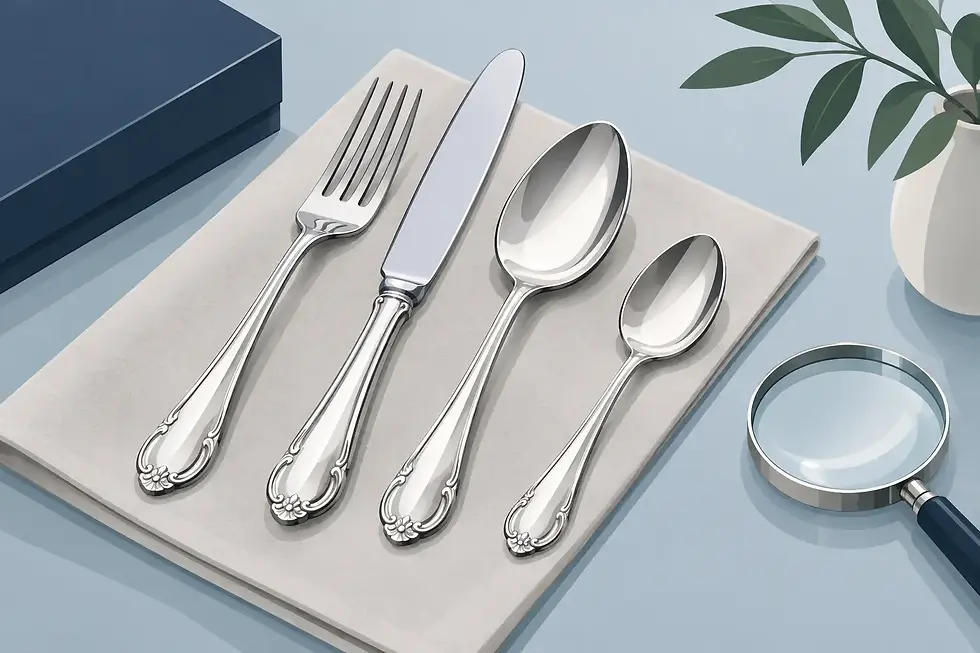
That difference matters especially with jewellery and heirlooms. If your intention is to sell a broken chain, unwanted rings or a collection of silverware, taking out a loan can add a layer of cost and administration that you do not need. If you are uncertain about parting with a sentimental item, however, a pawnbroking loan may offer a temporary alternative, provided you understand the full repayment terms.
Privacy and convenience are not small details
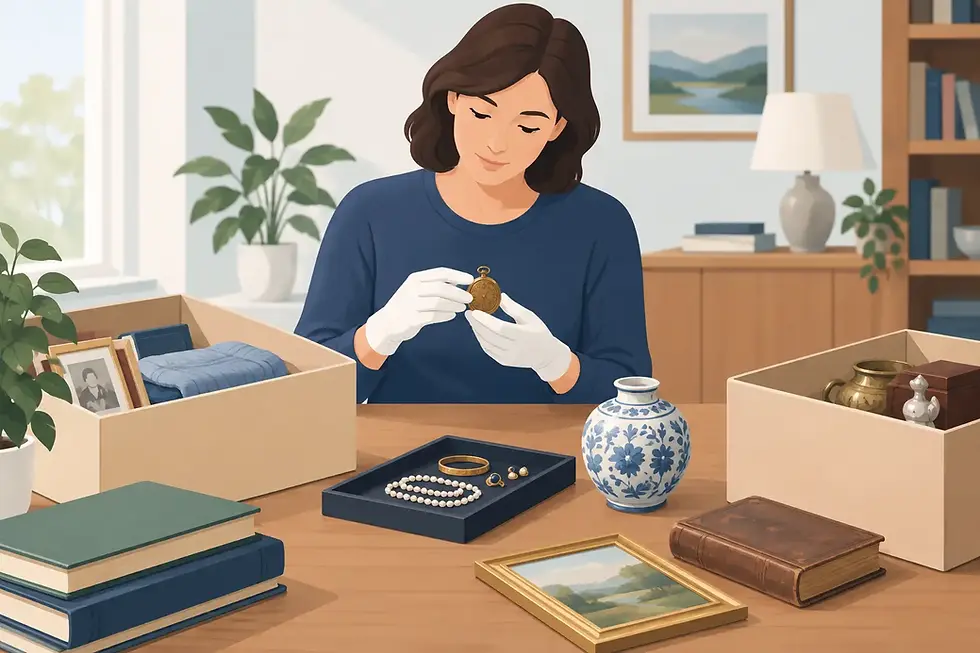
For many sellers, the practical difficulty begins before a valuation even happens. Carrying a substantial quantity of gold, jewellery, coins or a luxury watch through busy streets can feel uncomfortable. This is particularly true during a house clearance, after a bereavement or when several family members are involved in sorting belongings.
A private appointment removes that journey. You can gather items at your own pace, lay them out somewhere familiar and have them examined without a public counter, a queue or a hurried conversation. You also retain the option to ask questions as each item is assessed. If you have paperwork, watch boxes, hallmarked silver or jewellery that has been stored away for years, everything is close at hand.
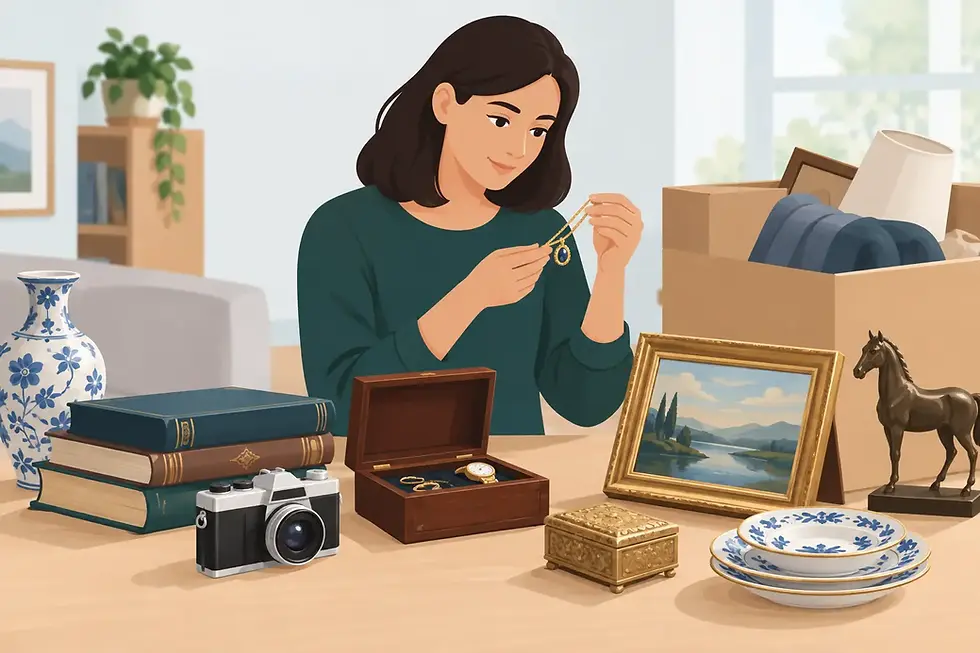
There is also a quieter benefit: you do not have to decide in advance what is worth taking. People often overlook damaged jewellery, single earrings, old sovereigns, costume pieces mixed with precious metals, or antique jewellery whose value is not immediately obvious. A specialist can separate items that have resale, collector or precious-metal value from those that do not.
How the price is worked out
A fair offer should never feel like a mystery. Gold and other precious metals are influenced by changing market prices, but weight alone is not the whole story. Purity, hallmarks, condition, gemstone quality, maker, design, age and resale demand can all affect what an item is worth.
For example, a plain broken 9ct gold bracelet may mainly be valued for its gold content. A signed vintage bracelet, an antique diamond ring or a desirable luxury watch may be worth considerably more than its scrap value. Silverware can depend on whether it is silver plate or solid silver, while coins and collectibles may require knowledge of rarity, edition and condition.
A pawnbroker must price with the risk and costs of a loan or retail resale in mind. That does not automatically make every pawnbroker offer unfair, but it does mean the figure may be shaped by a different business model. Some offers may be made quickly, with limited time to explain how a figure was reached.
At an in-home valuation, you should expect a careful inspection and a clear explanation of what has been identified. Ask whether the offer reflects metal weight, stones, brand, age or collector demand. If an item is being purchased for its precious-metal content only, it is reasonable to ask about its carat, weight and the market basis for the calculation. Clear answers allow you to judge the offer rather than simply react to it.
Ownership, loans and the risk of regret
Selling and pawning can feel similar at the counter, yet the consequences are very different.
With an outright sale, ownership passes only after you agree to the price. You receive payment and documentation for the transaction. It is usually the simpler option when the item is genuinely unwanted, when an estate needs to be settled, or when you are reducing possessions before moving home.
With a pawn loan, you remain able to reclaim the item if you repay according to the agreement. This can be valuable if a watch or piece of jewellery is personally important and you only need funds for a short period. However, it is essential to consider the total cost of borrowing, the repayment date and what happens if circumstances change. A low initial loan can become an expensive way to access money if it is rolled over or missed.
No one should rush this choice because of a difficult week or a busy house clearance. Put aside anything you are not ready to sell. A no-pressure valuation is useful precisely because it lets you learn what you own before making a final decision.
When a pawnbroker may be the better choice
A pawnbroker can be appropriate when your primary aim is a short-term loan rather than a sale. It may also suit you if you need an immediate, smaller amount of money and are comfortable travelling with the item, discussing terms in store and repaying within the agreed time.
Before committing, read the agreement closely. Check the interest rate, charges, loan period, renewal rules and the process if you cannot repay. Make sure you know whether you are entering a pawn loan or selling the item outright, as the distinction should never be left unclear.
For lower-value everyday items, a local shop may also be a convenient option. But convenience should not mean accepting a figure you do not understand, particularly where gold, diamonds, branded watches, antiques or significant family pieces are concerned.
When an in-home valuation is likely to suit you better
A home appointment is especially helpful when you have several items, are dealing with an estate, have mobility or time constraints, or simply prefer discretion. It gives you room to compare pieces, locate certificates and ask questions without feeling observed or hurried.
It can also be the more sensible route where specialist knowledge is needed. A mixed collection might include gold jewellery, platinum settings, old silver, pocket watches, coins and a designer timepiece. Treating every item as though it has only a scrap value risks missing the features that make certain pieces more desirable to buyers and collectors.
A professional buyer should handle items carefully, test and inspect them methodically, and explain the outcome in language that makes sense. If an offer is made, you should receive a clear record of the sale and secure payment arrangements. For larger amounts, bank transfer provides an additional documented trail; cash payment should always follow the relevant legal and business procedures.
Questions worth asking before you sell
Whether you choose a pawnbroker or a home visit, a few direct questions can protect your interests. Ask how each item has been identified, which factors affect the price, and whether any stones, signatures or brand details have been taken into account. Confirm how and when payment will be made, and ask for written documentation.
You may also want to ask whether you can keep items aside while you decide. This matters when belongings have emotional significance. A valuation can tell you about financial value, but only you can decide whether that is enough reason to let an object go.
Photographing valuable pieces before an appointment and gathering any receipts, certificates, service records or original boxes can also be worthwhile. These details are not always essential, but they may support the identification and value of watches, diamonds, designer jewellery and collectibles.
Make the decision in your own time
The best route is not always the fastest-looking one. A pawnbroker can serve a clear purpose for a temporary loan, provided the terms work for you. For an outright sale, particularly where privacy, multiple items and specialist assessment matter, an in-home valuation gives you more space to understand the offer before you decide.
If you are sorting through jewellery or valuables and are unsure what deserves a closer look, arrange a free, no-obligation assessment with We Pay Best. You can have each item considered carefully in the comfort of your own home, ask every question you need to ask, and choose what happens next in your own time.
Comments