
Gold Price Per Gram for Your Gold Jewellery

A broken bracelet at the back of a drawer can look unremarkable until you realise it is solid gold. Equally, a cherished inherited ring may have a value that is more complicated than its weight alone suggests. The gold price per gram is a useful starting point when considering a sale, but it is not the whole story - and a fair offer should never be presented as a mystery.
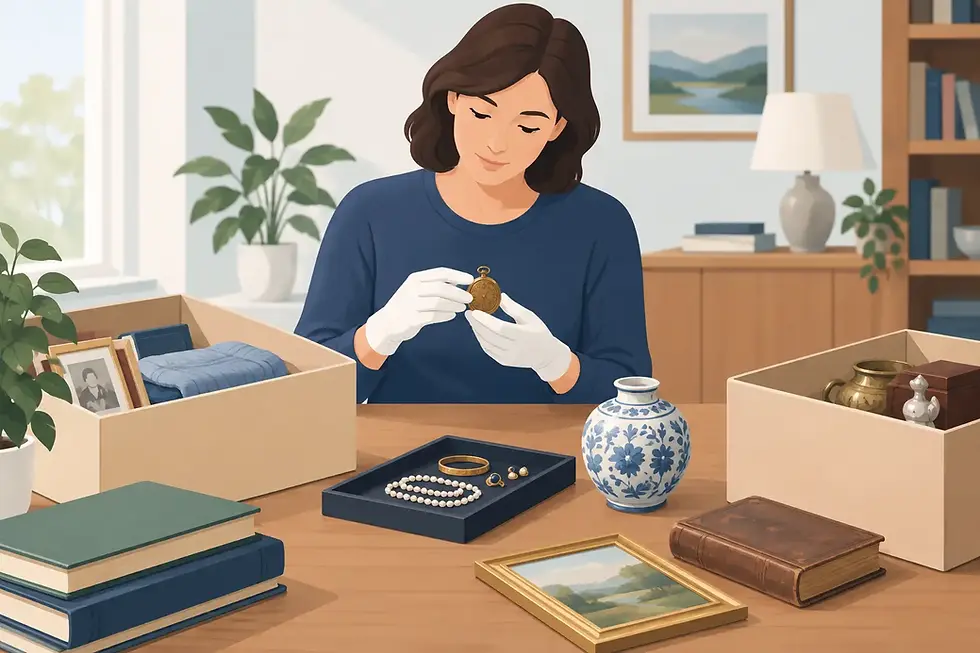
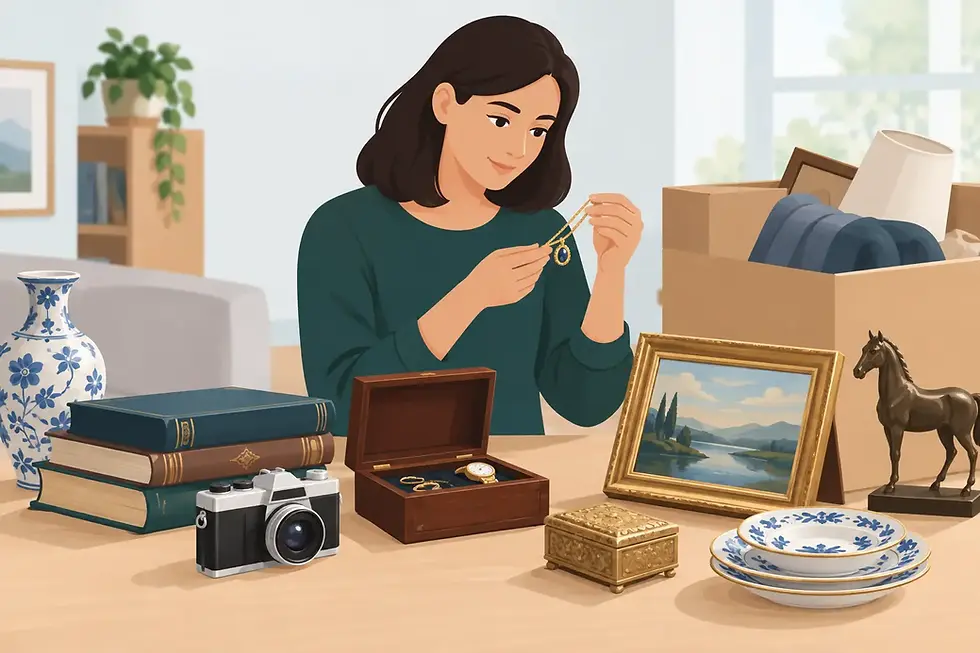
For many people, the question arises during a move, a house clearance or while sorting through family belongings. You may simply have jewellery you no longer wear. Whatever the reason, you deserve a clear explanation of what you own, what affects its value and time to decide without pressure.
Why the gold price per gram is only a starting point
Gold is traded globally, with its market value moving throughout the day. News about interest rates, currencies, inflation, geopolitical uncertainty and investor demand can all affect the underlying price. This is why an online figure seen one morning may not be identical to the price available later that day.
Market gold is commonly quoted by the troy ounce, whereas personal jewellery is usually weighed in grams. A buyer uses the current market rate as the basis for a valuation, then considers the purity and actual gold content of each item. The headline figure for pure gold cannot simply be multiplied by the total weight of every ring, chain or bangle.
A transparent valuation should make this distinction plain. If somebody quotes a very high price per gram without asking whether your item is 9ct, 14ct, 18ct or 22ct, it is not yet a meaningful offer. Those marks indicate how much gold is present in the alloy.
Carat changes the gold content
Pure gold is 24ct. It is soft, so jewellery is often made with other metals added for strength, colour and wearability. In the UK, 9ct and 18ct are particularly common. A 9ct item contains 37.5% gold, while an 18ct item contains 75% gold. A 22ct piece contains roughly 91.6% gold.
Two chains can therefore weigh exactly the same but have very different gold values. Their colour may offer a clue, but colour is not proof. Yellow, white and rose gold can all be produced at different carats, and older pieces do not always show a clear hallmark after years of wear or repair.
Hallmarks help, but inspection still matters
A hallmark can identify the fineness of the metal and, in some cases, provide useful information about where and when an item was assayed. It is an important part of the process, particularly for British jewellery. Yet hallmarks can be tiny, worn, obscured by resizing or absent from older and overseas pieces.
A professional assessment combines hallmark checks with careful testing. The aim is not to make assumptions from appearance, nor to rush a decision. Each item should be examined individually so that the valuation reflects what is actually there.
How gold jewellery is weighed and valued
A proper valuation begins with sorting items by metal and carat. A collection might include 9ct chains, an 18ct wedding band, plated costume jewellery and a silver necklace that happens to be stored in the same box. Treating it all as one lot would be inaccurate.
The eligible gold is weighed on suitable scales, normally after non-gold elements have been considered. This is particularly relevant for watches, stone-set rings, lockets, pearl jewellery and pieces with substantial clasps or fittings. In some cases, the metal weight can be established directly. In others, an experienced buyer must allow for components that are not gold.
The calculation is then based on the item’s weight, its verified purity and the current buying rate for that purity. The final buying rate will be lower than the international price of pure gold because a buyer must account for refining, handling, testing, administration and market movement. This is normal, but it should be explained in plain language.
For example, an 18ct ring weighing 4 grams is not valued as 4 grams of pure gold. At 75% purity, its gold content is approximately 3 grams before any further consideration of stones, settings or non-gold parts. The current market rate and the buyer’s stated rate then determine the offer.
That explanation matters. It lets you compare offers sensibly rather than being drawn in by an impressive-sounding figure that does not apply to your particular jewellery.
When jewellery is worth more than its gold weight
Not every gold item should be assessed as scrap metal. A signed bracelet, a sought-after vintage design, an antique brooch or a quality diamond ring may have value beyond the gold it contains. Condition, craftsmanship, maker, provenance, gemstones and resale demand can all change the picture.
This is especially relevant when dealing with family heirlooms. A Victorian pendant, an Art Deco ring or a luxury watch may carry personal meaning as well as commercial value. You may decide to keep it, pass it on or sell it. A respectful assessment gives you information for that decision; it should not turn sentiment into a reason to pressure you.
The same applies to diamonds and coloured stones. Small stones in a damaged setting may add limited value, while a substantial, high-quality diamond can materially affect an offer. A specialist should inspect it rather than dismissing the entire piece as simply ‘gold by weight’.
There are occasions when selling for gold content is entirely appropriate. Broken chains, single earrings, worn-out rings and unwanted jewellery often have no practical resale market, but their precious-metal content still gives them real value. A damaged item is not necessarily worthless.
Why two buyers may quote different prices
Different offers do not always mean that one buyer has made an obvious mistake. Businesses have different overheads, refining arrangements, resale channels and methods of testing. One buyer may focus solely on melt value; another may identify a resale opportunity for an antique or branded item.
What should concern you is a lack of detail. Be cautious of vague promises such as ‘top price’ without an explanation of purity, weight and rate. Likewise, do not feel obliged to accept an offer because someone has spent time examining your belongings. The decision remains yours.
A private appointment can be particularly helpful if you have several items, are handling an estate or do not wish to carry valuables around town. You can see the process in your own home or office, ask questions as they arise and retain control of the items throughout the discussion. At We Pay Best, assessments are carried out with this no-pressure approach, with a clear record of any agreed purchase and secure payment arrangements.
Preparing for a gold valuation without overthinking it
There is no need to polish jewellery aggressively or try to separate every item before an appointment. In fact, harsh cleaning can damage antique finishes, pearls, soft gemstones and delicate settings. Keep related items together where possible, particularly matching earrings, pendants and original boxes or paperwork for watches and branded jewellery.
If you know an item’s history, share it. A maker’s name, a previous valuation, a certificate for a diamond or knowledge that a piece belonged to a particular relative can prompt closer inspection. It does not guarantee a higher value, but it helps ensure that potentially significant details are not overlooked.
It is also sensible to decide beforehand what you are comfortable selling. You might want to sell only broken pieces, or you may wish to set aside a wedding ring or an item with strong family associations. A calm valuation is about understanding your options, not clearing every drawer in one go.
Choosing the right time to sell
Trying to predict the perfect gold market peak is difficult, even for experienced investors. If you need funds for a clear purpose, or if jewellery has been sitting unused for years, a fair market-based offer today may be more useful than waiting for a small possible change in the rate.
On the other hand, if an item is sentimental and you feel uncertain, wait. Gold can be valued again later. There is no advantage in making a decision you may regret simply because a buyer is present.
The most reassuring way to approach the gold price per gram is to treat it as information, not a sales tactic. Ask how your items were tested, what carat they are, how they were weighed and whether any stones, design or antique appeal have been considered. With those answers, you can make a well-informed choice in your own time - and let each piece’s practical and personal value guide what happens next.
Comments