
Gold Trends: What They Mean for Your Jewellery

A gold chain left unworn in a drawer, a collection of inherited rings or a broken bracelet can feel like a personal decision rather than a financial one. Yet gold trends can affect what those pieces may be worth at a particular time. Understanding the market does not mean you need to become a commodities expert. It means you can ask better questions, recognise what contributes to an offer and decide whether now feels like the right time to arrange a valuation.
Gold trends are about more than the headline price
When people hear that gold has risen or fallen, they are usually hearing about the international gold price. This is commonly quoted for pure gold and moves throughout the trading day. It provides an essential starting point, but it is not the amount paid for every gold item.
Most jewellery is made from an alloy, meaning gold is mixed with other metals for strength, colour and durability. A 9ct ring contains less pure gold than an 18ct ring of the same weight. Its value for gold content will therefore be different, even if the two pieces look similar at first glance.
The price a specialist buyer can offer also reflects the item’s weight, purity, the current market rate, the cost of refining where appropriate, and whether the piece has value beyond its metal. A signed antique brooch, desirable watch or diamond-set ring may need to be considered as an individual item rather than simply weighed for scrap value.
That distinction matters. A strong gold market may make unwanted jewellery more valuable, but it does not turn every piece into an investment collectible. Equally, a plain old chain should not be dismissed because it lacks a famous name. Its precious-metal content may still have meaningful value.
Why gold prices move
Gold has a long-standing reputation as a store of value, particularly during periods of uncertainty. Its price can respond to a mixture of economic, political and financial conditions, often all at once. Interest rates, inflation expectations, currency movements and global events can each influence demand.
For UK sellers, the pound also matters. Gold is generally priced internationally in US dollars, so changes in the pound-dollar exchange rate can affect the sterling value of gold even when the underlying dollar price has barely moved. This is one reason a news headline from abroad does not always tell the full story for someone selling jewellery in London or elsewhere in the UK.
Demand from central banks, investors and jewellery markets can also play a part. When investors seek assets perceived as stable, gold demand may increase. When confidence returns to other markets or interest-bearing savings become more attractive, the direction can change. There is no reliable rule that says gold must rise in a crisis or fall when conditions improve. Markets can be unpredictable, and short-term movements are rarely a sound reason to rush.
A rising price is information, not a deadline
It is understandable to see a high gold price and wonder whether to sell immediately. For some people, that is sensible: the items are unwanted, they have been stored for years and the funds would be more useful now. For others, the jewellery is tied to a recent bereavement, a family story or a decision that does not need to be made quickly.
A valuation gives you information without taking away your control. You can learn what you have, understand the basis of an offer and take time to decide. There should be no pressure to sell because a market has moved on a particular day.
How gold jewellery is assessed fairly
A professional assessment begins with careful inspection. Hallmarks are checked where present, as these identify the fineness of the metal and can provide clues about date and origin. Common UK gold standards include 9ct, 14ct, 18ct and 22ct, although older, overseas or unhallmarked pieces require additional testing.
Weight is then measured accurately. Stones, clasps, springs and non-gold components may affect the calculation, so a clear explanation is useful. If an item is hallmarked 18ct, for example, that does not mean every gram is pure gold. The calculation accounts for the proportion of fine gold within the alloy.
Condition is relevant, but not always in the way sellers expect. A snapped chain or single earring may have limited resale appeal as jewellery, yet its gold content remains valuable. Conversely, an intact item in good condition may be worth more as a wearable piece, particularly if it is antique, from a recognised maker or has desirable gemstones.
Diamonds and other stones should not be treated as an afterthought. Their value depends on factors such as size, quality, cut, condition and demand, while settings and certificates can add useful context. Watches, coins, silverware and antique jewellery require their own specialist knowledge. A broad statement that everything is worth its weight in gold is rarely accurate.
What current gold trends can mean for common finds
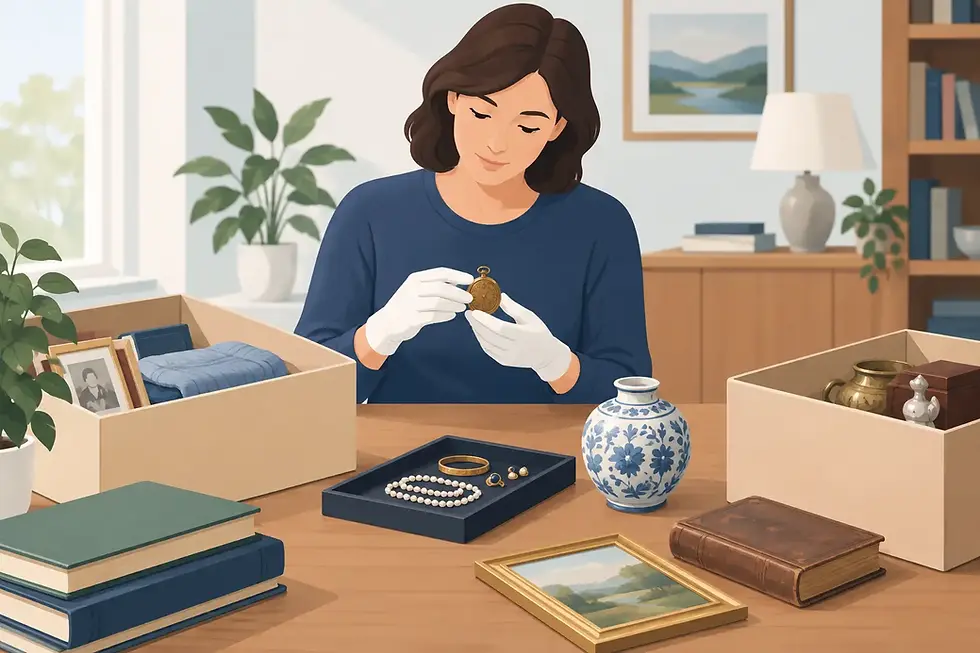
During a house clearance or move, it is easy to group valuables together as “old jewellery”. Separating them calmly can lead to a clearer assessment. Broken gold jewellery, mismatched earrings, dental gold and damaged chains are usually considered chiefly for their metal content. Hallmarked rings, bangles and necklaces may have both metal and resale value.
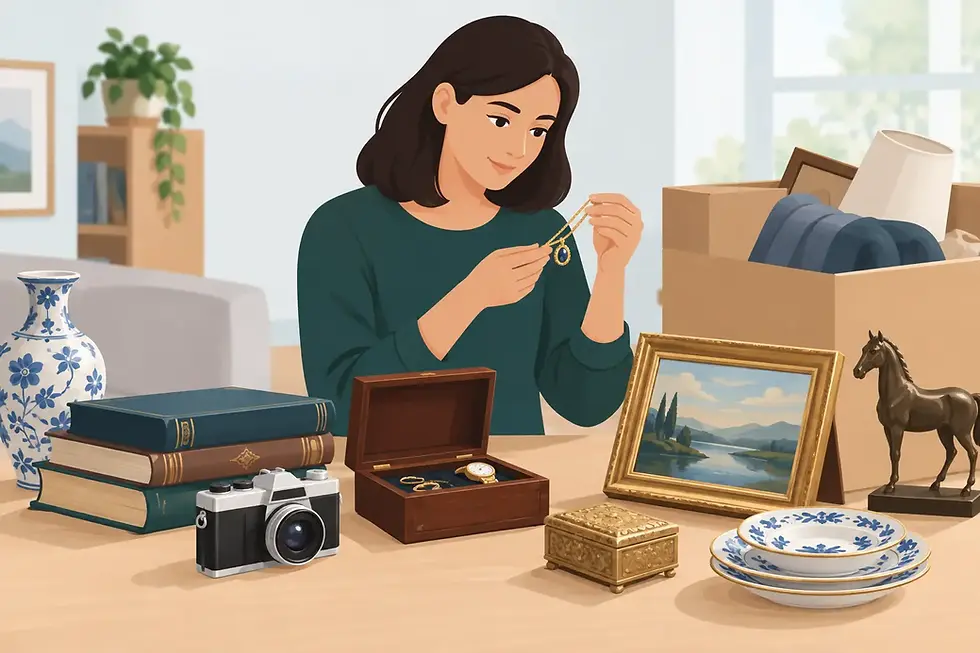
Inherited pieces deserve more time. An older signet ring, mourning brooch, charm bracelet or unusual locket may carry a history that is as important to your decision as its price. Before selling, you may wish to photograph it, ask relatives if they recognise it or keep one item as a personal reminder. There is no financial advantage in making a decision before you feel ready.
Gold coins need particular care. Some coins are valued largely for their gold content, while others have collector interest because of rarity, condition, date or mint. Cleaning coins before an assessment can reduce their collector appeal, so it is usually best to leave them as found. The same principle applies to antique jewellery and silverware: polishing can be appropriate in some cases, but it should not be the automatic first step.
Timing a sale without trying to predict the market
No one can say with certainty where gold will be next month or next year. Waiting may produce a higher price, but it may also produce a lower one. More importantly, waiting can leave valuable items unsecured in a drawer, cupboard or empty property when they are unlikely ever to be worn or used.
A practical approach is to begin with your own circumstances. Ask whether the items are genuinely unwanted, whether you know what they are worth, and whether selling would help with a move, estate administration, household costs or another priority. If the answer is yes, a current valuation gives you a real figure rather than an estimate based on a headline price.
It can also help to separate items into three groups: pieces you will certainly keep, items you may pass on within the family, and belongings you are comfortable considering for sale. This avoids the common regret of selling something meaningful simply because it was mixed in with unwanted pieces.
A private valuation should make the process clearer
For many people, transporting jewellery or inherited valuables around town is not appealing. A private appointment at home or at your office can offer a more comfortable way to have items examined, especially where there is a larger collection, an estate to manage or objects that feel too personal to discuss at a counter.
A careful buyer should explain how each offer is reached in plain language, distinguish metal value from potential resale value, and provide documented payment if you choose to sell. You should know what is being purchased, at what price and why. If you are uncertain, you should be able to keep your belongings and consider the information in your own time.
At We Pay Best, assessments are designed around that principle: professional inspection, a clear market-based explanation and no obligation to proceed. The aim is not to persuade you to part with a family possession. It is to give you a simple, safe way to make an informed choice.
Gold trends are useful context, but they are only one part of the decision. The most worthwhile next step is often simply to find out what you own, have it handled with care and give yourself the space to decide what feels right.

Comments