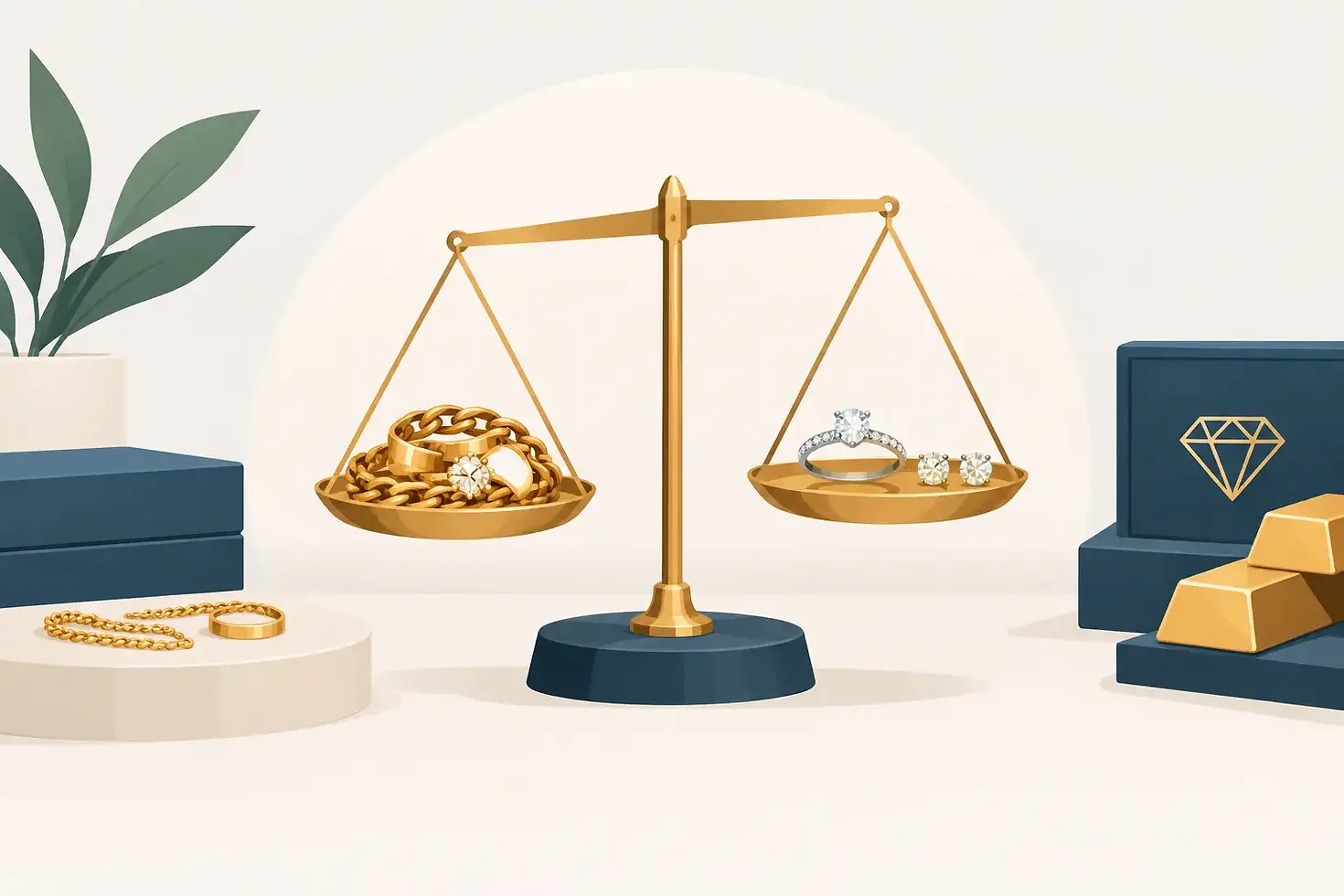
Does Jewellery Weight Affect Value? What Counts

A heavy gold chain can look far more valuable than a delicate ring, but weight is only one part of the picture. If you are asking, does jewellery weight affect value, the honest answer is yes - particularly for precious-metal jewellery - but it never tells the whole story. Purity, gemstones, maker, condition and current market demand can all change what an item is worth.
That distinction matters when you are sorting through a jewellery box, dealing with an inherited collection or clearing a family home. A piece that feels light may hold considerable value because of its diamonds, craftsmanship or provenance. Equally, a substantial item may be valued chiefly for the metal it contains. A careful assessment should explain which applies, in plain language, before you decide whether to sell.
How jewellery weight affects value
Weight has a direct bearing on the value of gold, silver and platinum because these metals have an underlying market price. The more genuine precious metal an item contains, the more material value it is likely to have.
A buyer will weigh the piece accurately, usually in grams, then identify its fineness or purity. The number on the scales alone is not enough. For example, a 20-gram 9-carat gold bracelet and a 20-gram 18-carat gold bracelet weigh the same, yet the 18-carat bracelet contains a greater proportion of pure gold and would ordinarily command more for its metal.
This is why a professional valuation considers both weight and hallmark. In the UK, you may see marks such as 375 for 9-carat gold, 585 for 14-carat, 750 for 18-carat, 925 for sterling silver or 950 for platinum. Older pieces may carry traditional hallmarks instead. Where marks are worn, missing or unclear, the metal can be tested carefully rather than guessed.
The daily precious-metal market also matters. Gold prices move, sometimes noticeably, so the same item may have a different metal value at different times. A fair offer should be tied to the current market, not a vague estimate made months ago.
Gross weight is not always the metal weight
Jewellery is often weighed as a complete piece, but the total is not necessarily the same as the weight of recoverable precious metal. Stones, glass, enamel, pearl, resin, non-precious fittings and internal components all add weight without adding gold, platinum or silver content.
This does not mean those elements have no value. It simply means they need to be assessed separately. A gemstone-set ring may have a lower metal weight than its total weight suggests, while its stones could make it much more desirable than an unadorned ring of the same size.
Hollow jewellery needs similar care. A large hollow bangle can appear substantial but contain less metal than a smaller solid bangle. It still deserves proper handling and a clear explanation, especially if it is a piece you have owned for years or inherited from someone close to you.
When weight is the main driver of an offer
For broken, tangled, worn or unfashionable gold jewellery, weight and purity are often the most significant factors. This includes single earrings, snapped chains, damaged rings, dented bangles and odd lengths of gold. They may no longer be wearable, but their precious-metal content can still have real value.
In these cases, the item is commonly valued for its scrap or melt value. That is not a criticism of the piece or its history. It is simply the most realistic route to value when repair would cost more than the jewellery could sell for as a finished item.
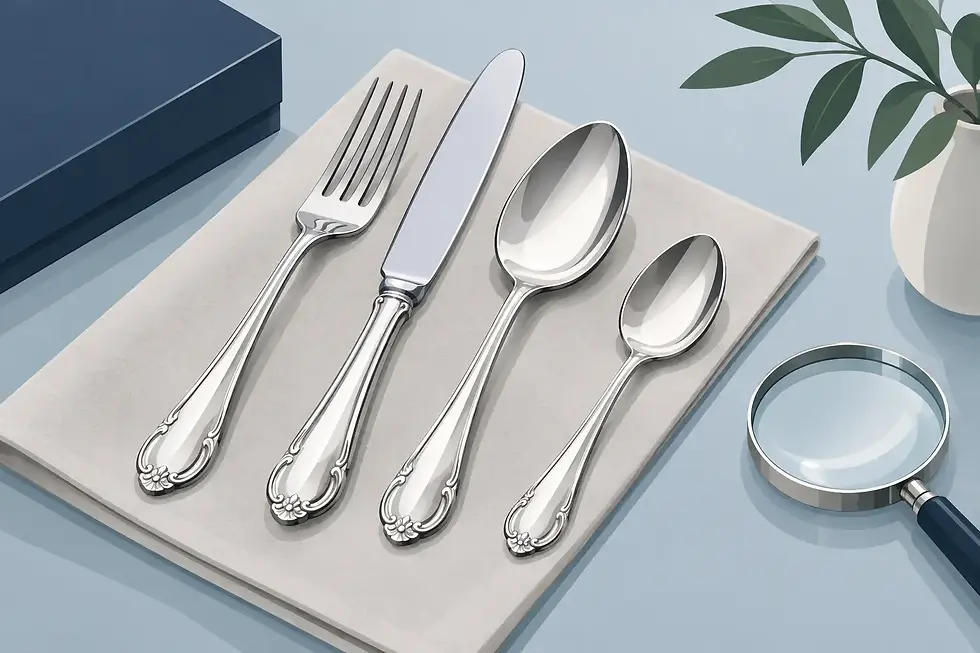
Silver jewellery is also affected by weight, although sterling silver usually has a lower value per gram than gold or platinum. Heavy sterling chains, table silver and silverware can still merit assessment, especially where there are recognised makers, good condition or complete matching sets.
When weight matters less than other details
Some of the most valuable jewellery items are not the heaviest. A fine diamond solitaire, an antique brooch from a sought-after period or a signed designer bracelet may be worth more than its metal content alone.
Diamonds are assessed according to qualities including carat weight, colour, clarity and cut. A small, high-quality diamond can be more valuable than a larger stone with visible inclusions or poor cutting. Coloured gemstones require their own specialist judgement: natural sapphire, ruby, emerald and other desirable stones can vary greatly depending on quality, treatment, origin and condition.
Design and maker can also change the calculation. Jewellery by established houses or respected designers may attract resale interest because buyers are paying for workmanship, style and name as well as materials. Original boxes, certificates, receipts and diamond reports can support that value, although their absence does not automatically mean an item has no merit.
Antique and period jewellery deserves particular attention. Victorian, Edwardian, Art Deco and mid-century pieces can have collector appeal that outweighs a simple calculation based on grams. Alterations, missing stones and heavy repairs may reduce that appeal, but age alone should never lead to assumptions. Each piece needs to be inspected on its own merits.
Condition can change the outcome
Condition is part of value, but it is not always decisive. A broken 18-carat gold chain retains its metal value. A damaged designer piece may still be desirable if it can be repaired sympathetically. On the other hand, a ring with chipped stones, replaced parts or a worn setting may need a more cautious resale assessment.
It is also worth remembering that sentimental value and sale value are different things. A family heirloom can be priceless to one person and have a modest market value. That can be difficult to hear, which is why a respectful, no-pressure valuation should give you the information without making the decision for you.
Does jewellery weight affect value in inherited pieces?
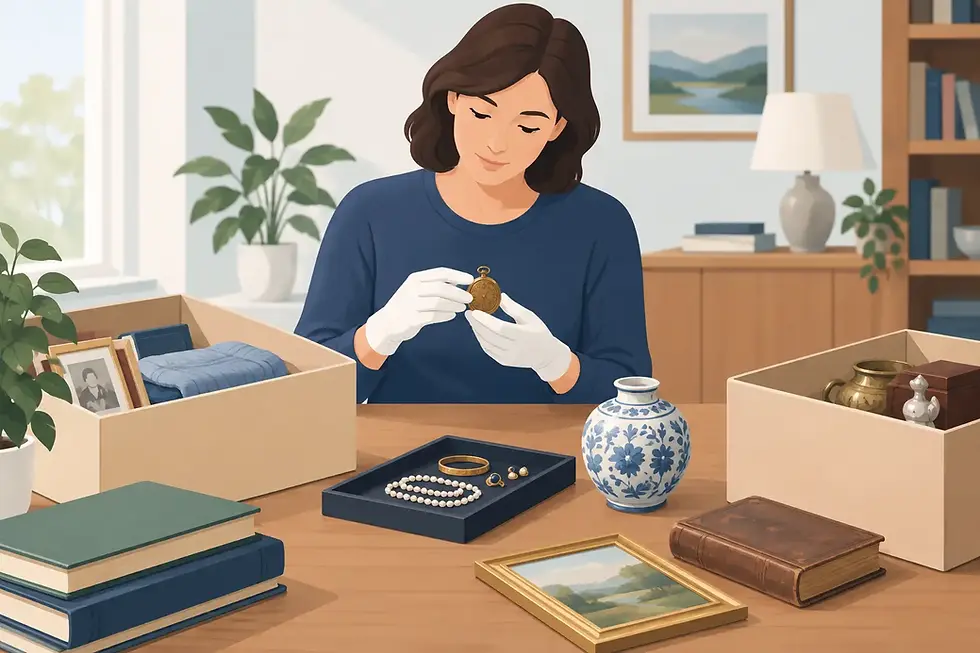
It often does, but inherited jewellery is exactly where a weight-only approach can miss something important. A collection from a drawer, safe or estate clearance may contain everyday gold alongside older items that need closer examination.
Before any valuation, keep sets and matching items together. A necklace and earrings, a boxed dress set or a group of pieces by the same maker may be more appealing as a collection than as separate items. Do not remove stones or try to polish hallmarks yourself. Harsh cleaning can damage delicate finishes, antique patina, pearls and soft gemstones.
If you have paperwork, bring it out alongside the jewellery. Valuation documents, gem certificates, purchase receipts and watch papers can be useful. So can a little family information, such as an approximate age, a known maker or whether a piece was bought abroad. These details may not alter the result, but they help ensure nothing is overlooked.
What a transparent assessment should include
You do not need to know carats, hallmarks or diamond grades before arranging a valuation. The responsibility is on the buyer to examine the items properly and explain the basis of any offer.
A clear assessment normally separates metal value from any additional resale value. You should be told the purity identified, the weight used for the calculation and whether gemstones, brand, design or antique interest have affected the offer. If an item is only suitable for its metal content, that should be said plainly. If it warrants further specialist consideration, that should be handled with equal care.
You should also remain in control throughout. There is no need to accept an offer immediately simply because an item has been weighed. Take the time you need, ask questions and keep a record of what has been assessed. For a sale, secure documented payment and a written invoice provide useful reassurance.
A simple way to prepare your jewellery
Place the jewellery you are considering in one secure pouch or box, keeping any certificates and boxes nearby. Avoid posting valuable items or carrying them around unnecessarily while you try to obtain several opinions. A private appointment at home or work can make the process calmer, particularly during a house clearance or when several family members need to be present.
At We Pay Best, items are assessed carefully, with current market prices and their individual characteristics in mind. Whether a piece is a broken gold chain, a diamond ring you no longer wear or a family heirloom you are not ready to decide about, the purpose of an assessment is to give you a clear, fair basis for your next step.
Weight can be a valuable starting point, but it should never be the last word on your jewellery. Give each piece the chance to be properly examined, then make your decision in your own time.
Comments