Scrap Gold Versus Resale Value: Which Is Higher?

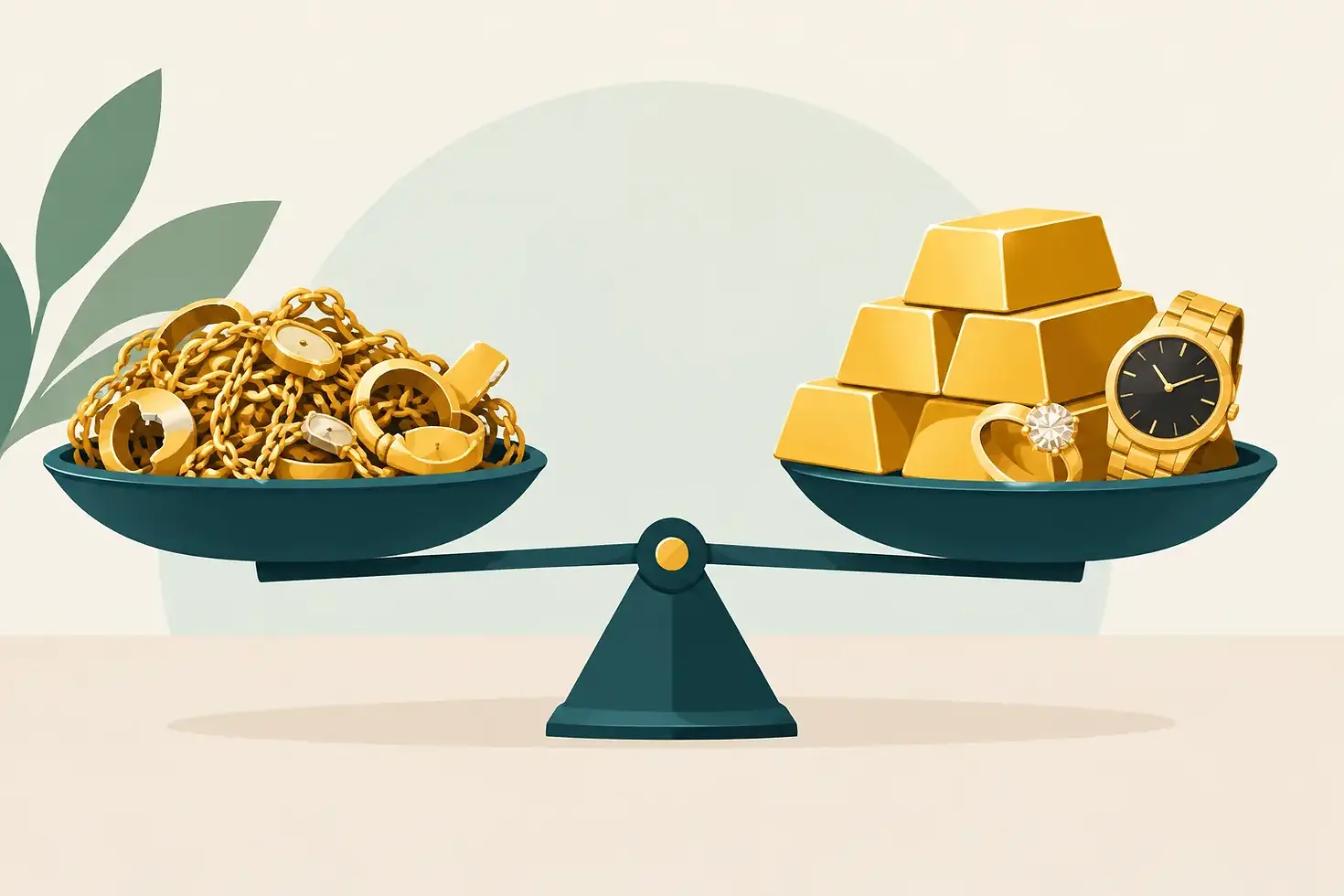
A broken chain can be worth its weight in gold, while an inherited bracelet may be worth considerably more than the gold it contains. That is the essential difference between scrap gold versus resale value. Knowing which applies to your item can make a meaningful difference to the offer you receive - and helps you decide whether selling is right for you.
For many people, the question arises while sorting a jewellery box, clearing a family home or preparing to move. Some pieces are damaged, unmatched or never worn. Others are fine jewellery, signed watches or older items with craftsmanship that deserves a closer look. A fair buyer should explain the difference plainly, handle every item with care and give you time to consider the offer without pressure.
What is scrap gold value?
Scrap gold value is based principally on the precious metal within an item. The buyer assesses its weight, purity and the current market price of gold, then calculates what the metal is worth for refining or reuse.
In the UK, purity is usually indicated by a hallmark. Common examples include 9ct, 14ct, 18ct and 22ct gold. A higher carat means a greater proportion of pure gold, although weight remains just as relevant. An 18ct ring may contain more gold than a 9ct ring of the same weight, but a heavier 9ct piece can still have a higher overall scrap value.
The daily gold market price matters, which is why two valuations made months apart can differ even when the jewellery has not changed. Buyers also need to account for refining, handling and commercial costs. The offer is therefore not simply the headline price of pure gold quoted in the news.
Scrap pricing is often appropriate for items such as snapped chains, single earrings, dented plain bands, damaged bracelets and jewellery with no identifiable maker or saleable design. Sentimental value is personal and cannot be put into a market calculation, but it should always be respected. You remain in control of whether you sell.
When resale value can be higher than scrap gold
Resale value reflects what a buyer may reasonably pay for an item as jewellery, a watch or a collectible object in its own right. Its gold content still provides a useful baseline, but it is not the whole story.
A wearable 18ct gold necklace with an attractive design may command more as a finished piece than as metal. The same can apply to antique jewellery, distinctive vintage pieces, signed jewellery and items with well-cut gemstones. A recognised maker, desirable period, excellent condition or original box and papers can all affect the resale market.
Luxury watches are a clear example. The gold case has an intrinsic metal value, yet the make, model, movement, condition, provenance and accompanying paperwork may make the watch worth far more than its scrap content. Equally, a diamond ring should not automatically be treated as scrap simply because the setting is gold. The diamond’s quality, size and certification, together with the design and maker, may influence its resale potential.
That does not mean every older or branded-looking item carries a premium. Fashion changes, demand varies and condition matters. A heavily worn piece, an unpopular design or jewellery requiring costly repair may be more realistically valued for its metal. A professional inspection separates promise from assumption.
The condition question
Condition affects resale value more sharply than scrap value. A broken clasp makes little difference to the amount of gold in a bracelet, but it can reduce the price a new owner will pay if repair is difficult or uneconomic.
Conversely, a minor repair does not necessarily remove resale potential. A specialist will consider whether the item remains attractive, wearable and commercially viable after restoration. Do not discard damaged jewellery or assume it has no value. Bring all parts, including loose stones, broken sections, boxes, receipts, certificates and spare links where available.
Why hallmarks and signatures matter
Hallmarks help establish metal purity, while maker’s marks and signatures can identify an item with a stronger collector or resale market. These details may be tiny, worn or hidden inside a ring shank, on a clasp or beneath a watch lug. They are worth checking carefully rather than relying on appearance alone.
Not every piece is hallmarked, particularly older jewellery or items made abroad. In those cases, testing and close inspection can establish the metal and guide the valuation. A missing hallmark is not proof that an item is worthless, nor is a hallmark by itself proof of a high resale premium.
Scrap gold versus resale value: how a valuation should work
A proper valuation begins with examination, not an assumption that everything goes into a melting pot. Each item should be considered individually: its metal, weight, hallmarks, gemstones, maker, age, condition and current demand all deserve attention.
For gold being valued as scrap, the process should be transparent. You should be told the carat, the relevant weight and how the current market price informs the offer. If stones or non-gold components are present, the buyer should explain whether they are included in the calculation or assessed separately.
For potential resale items, the conversation should be broader. A specialist may examine construction, design, signatures and any available provenance before deciding whether a resale offer is justified. This takes more judgement than a simple weight-based calculation, but it can prevent a distinctive item being undervalued as scrap.
It is also helpful to distinguish between an insurance valuation and a purchase offer. An insurance replacement figure is usually based on the cost to replace an item through retail channels. It can be much higher than the amount a buyer can pay when purchasing it outright. A resale offer reflects what the market is likely to support after authentication, preparation, selling costs and commercial risk.
What to do before you sell
There is no need to polish old jewellery aggressively or attempt repairs before an assessment. Cleaning can sometimes damage delicate finishes, loosen stones or remove the character collectors value. Keep items together as you found them, particularly sets of jewellery, matching earrings, watch boxes and documents.
If you have an old valuation certificate, receipt or family note, keep it with the item. These papers may not set the price, but they can provide useful context. The same applies to watch service records and diamond certificates.
Most importantly, avoid separating pieces into a "valuable" pile and a "scrap" pile too quickly. A single cufflink, an unusual brooch or a worn-looking ring may have features that are not obvious at first glance. Let the inspection come before the decision.
A calm, informed way to decide
Selling precious belongings can be practical, emotional or both. You may be turning unworn jewellery into funds for a move, handling an estate with siblings, or simply making space after years of keeping items in a drawer. There is no need to rush because an item is old, damaged or unfamiliar.
A private, no-obligation appointment gives you the opportunity to see your pieces assessed in your own home or office, ask direct questions and understand whether the offer is based on scrap gold, resale potential or a combination of both. At We Pay Best, eligible items are inspected carefully, market factors are explained in plain language and payment is documented securely once you choose to proceed.
The right outcome is not always the highest-looking figure on paper. It is an offer you understand, a process that feels safe and enough information to make your decision in your own time. Before parting with any piece, ask how its value was reached and whether its design, maker, stones or history have been considered.
Comments