
An Inherited Silver Collection Sale Example Explained

A sideboard full of silver can look like one decision, but it rarely is. A tray from a grandparent’s home may sit beside everyday cutlery, presentation pieces and plated items that carry very different values. This inherited silver collection sale example shows how a professional assessment can separate those items clearly, so a family can decide what to keep and what to sell without guesswork or pressure.
An inherited silver collection sale example
Consider a family clearing their late aunt’s house in Surrey. In the dining room they find a canteen of cutlery, two teapots, a coffee pot, a large serving tray, candlesticks and several small dishes. Some pieces are engraved with family initials. Others were wrapped in old newspaper and had not been used for years.
Before arranging a valuation, the family assume it is all “old silver”. That is understandable, but silver is not one single category. Some pieces may be British sterling silver, some may be foreign silver of a different standard, and some may be silver plate. The distinction can make a considerable difference to an offer.
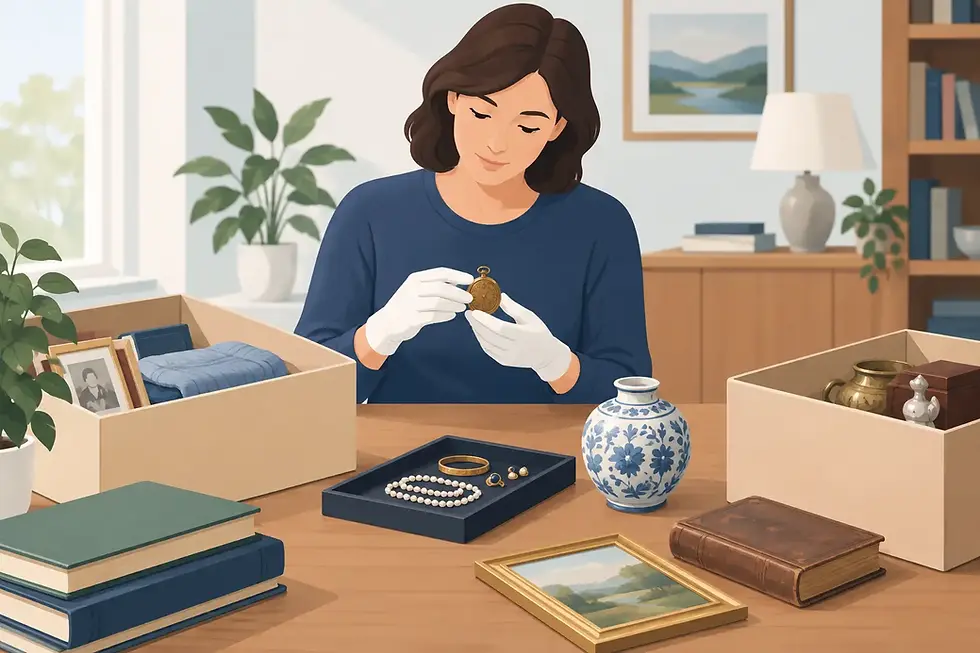
At a private appointment, each piece is laid out carefully and inspected in plain sight. Hallmarks are checked, where present, and the items are weighed. The condition, maker, pattern, age and usefulness of the piece are also considered. The family can ask questions as the assessment takes place and can set aside any item they are unsure about selling.
In this example, the findings might look like this:
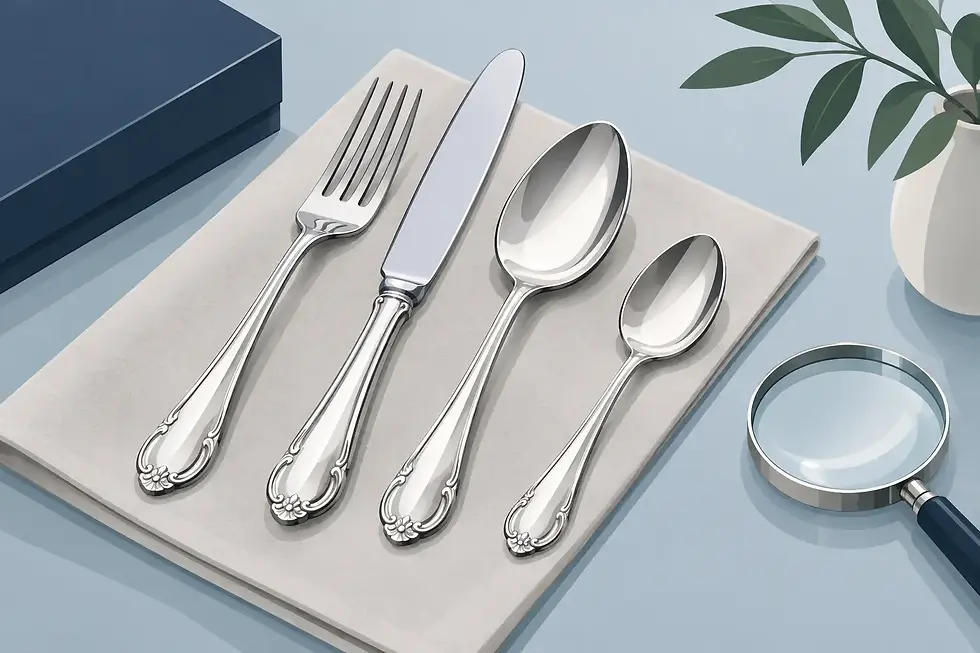
The canteen contains 84 pieces of British sterling silver cutlery, with clear hallmarks, weighing 2.4 kilograms excluding stainless-steel knife blades.
The two teapots and coffee pot are sterling silver but have wooden handles and insulated sections, which are not included in the silver weight.
The large tray and candlesticks are silver plated, not solid silver, although they may still have decorative or resale interest.
A small, heavy Victorian dish is sterling silver from a recognised maker and has stronger value as an individual antique than as scrap silver.
This does not mean every sterling item should automatically be sold for its weight alone. Nor does it mean plated items have no value. It means the right route depends on what each piece is, its condition and whether there is a current resale market for it.
How the value is worked out
For solid silver, the starting point is usually the fineness of the metal and the current silver market price. British sterling silver is generally 925 parts per thousand silver, often marked “925” or identified through a set of British hallmarks. Older pieces may use traditional marks rather than a numerical fineness mark, which is why specialist inspection matters.
The total weight must be adjusted sensibly. Knife handles can be filled, teapot handles may contain wood or resin, and candlesticks often have weighted bases made from another material. A fair valuation does not treat these parts as solid silver. Equally, it should not dismiss a piece simply because its full weight cannot be counted as metal.
The second part of the assessment is the object itself. A desirable maker, an elegant pattern, an unusual period or a complete matching set can attract collector or trade demand. A heavy Georgian serving spoon, for example, may deserve separate consideration. By contrast, a monogrammed set of everyday cutlery in a common pattern may be valued principally for its silver content, even if it was expensive when originally bought.
Condition also matters. Dents, splits, worn plating and missing pieces can reduce resale appeal. Gentle tarnish is different. Tarnish is normal on silver and is not usually a reason to polish aggressively before an appointment. Over-polishing can soften detail, remove original finish and make antique pieces less appealing to collectors.
A realistic breakdown of the example
The family’s collection has three different outcomes. The sterling cutlery is valued mainly by its adjusted silver weight, with a modest additional allowance because it is a largely complete set. The teapots are assessed on their silver content, less the non-silver fittings and any repair issues. The Victorian dish is offered a separate figure reflecting its maker, age and saleability.
The plated tray and candlesticks are explained separately. Their metal content does not carry the same value as sterling silver, because silver plate is a thin layer over a base metal. If they are attractive, substantial or by a sought-after maker, they may still be saleable. If not, the practical advice may be to retain them for family use, offer them through a local auction, or include them within a wider house-clearance decision. Clear advice is more useful than suggesting every shiny item is highly valuable.
After the inspection, the family receives an explanation of which pieces are solid silver, the relevant weights, why particular items have been valued individually and how the offer has been reached. They do not have to accept on the day. A no-pressure appointment gives them time to speak to relatives, check whether anyone wants an engraved piece, or simply reflect before making a decision.
What to do before selling inherited silver
You do not need to polish, catalogue or research every item before arranging an assessment. In fact, a few sensible precautions are usually enough. Keep sets together where possible, including cases, certificates and any notes about provenance. Do not throw away tarnished or damaged pieces, as hallmarks may still be present and the underlying silver may remain valuable.
It is also worth looking in less obvious places. Silver can be found among napkin rings, cigarette cases, photograph frames, trophy cups, sugar tongs, dressing-table sets, sauce boats and small presentation items. A frame may be marked sterling but have a wooden back, while a set of candlesticks can be weighted. These are normal details, not problems, and they are precisely why an item-by-item examination is preferable to a rough estimate from photographs alone.
If several family members are involved, agree beforehand who can make the final decision. You may want to keep a sentimental item even where it has a good sale value. There is no wrong answer. A valuation provides information; it does not require you to part with anything.
Why a private valuation can make the process easier
Transporting a large collection through London or further afield can be inconvenient and can expose valuables to unnecessary risk. A professional home or office appointment allows the collection to be examined where it already is, at a pace that feels comfortable. It is particularly helpful during probate, a move, or a house clearance, when there are already many decisions to manage.
A careful buyer should explain the difference between sterling silver, continental silver and plate, identify any items that merit separate treatment, and provide a documented record if you choose to sell. Payment arrangements should be clear before you agree. For higher-value collections, secure bank transfer is commonly the most suitable method, with the details recorded on an invoice.
The market can move, especially where a collection is being valued largely for precious-metal content. That is why a valuation tied to current prices is more meaningful than an old insurance figure or a vague estimate heard years ago. Insurance valuations can be useful for replacement purposes, but they are not the same as a realistic purchase offer.
Keep control of the decision
Inherited silver often carries two values at once: a financial value and a family value. The best outcome is not necessarily selling every item, nor keeping everything because deciding feels difficult. It is knowing exactly what is in front of you and being treated fairly while you choose.
Whether you have a single box of cutlery or a full dining-room collection, We Pay Best can assess eligible silver discreetly at your home or office, explain the findings in plain language and make a clear, no-obligation offer. You remain in control throughout, and can take the time you need before letting any family piece go.
Comments